
Romance and investment scams
When a romance moves from messages to a fake trading account
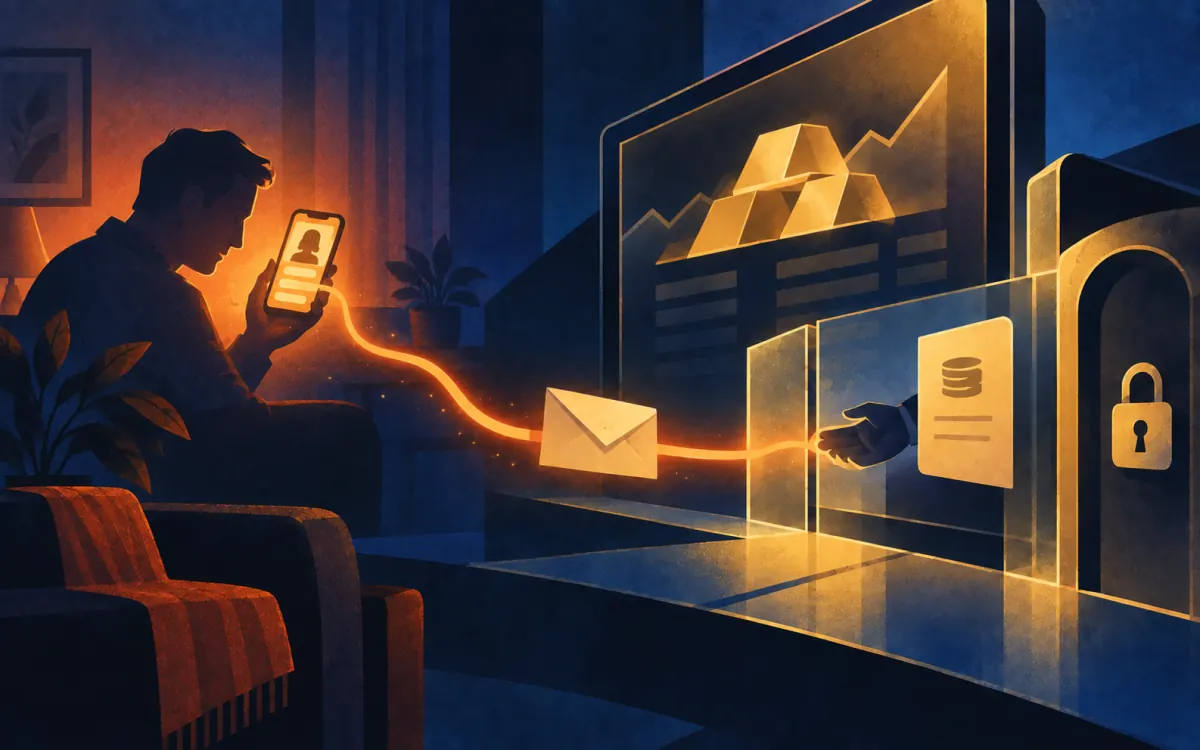
A relationship can become the bridge to a counterfeit investment site. A fake balance and a last-minute withdrawal fee are reasons to stop and verify, not to send more.
A growing account balance on a website is not proof that your money is invested or that you can withdraw it. When a new online partner guides the investment, check the platform independently before making even a small deposit.
In an AARP article published March 23, 2026, sportswriter Al Levine described how a wrong-number text turned into a 76-day online relationship with someone calling herself Daisy. She urged him to trade on a counterfeit investment site. Levine said the account displayed a $1.3 million balance, then demanded $216,000 in taxes before he could withdraw. He lost $271,000, all his savings.
The relationship can make the investment feel safer
Levine said the scam blended personal attention with a gold-trading pitch. Pictures, daily updates, and a site that resembled a trading account helped the story feel consistent. The account showed apparent profits, but those numbers were controlled by the scammer. When he tried to withdraw, a new payment demand kept the false balance out of reach.
This is a common shape in investment fraud: a friendly contact builds trust, a site shows fictional growth, and the victim is urged to add money. An extra payment described as tax, insurance, or a release fee does not prove the platform is legitimate.
Verify the platform outside the relationship
Do not use a website or app recommended by an online love interest as the only way to check an investment. Search the company's legal name through Investor.gov and contact your state securities regulator if you cannot confirm its status. Ask a registered professional you chose yourself to review the product and withdrawal terms.
Do not let an online partner direct investment decisions or tell you to borrow, liquidate long-term savings, or pay more to release a balance. A displayed profit is only a claim. Your bank statements show whether money left your account; they do not verify where the platform sent it.
If the site will not release your money
Stop sending funds. Save screenshots, account pages, messages, phone numbers, and transaction receipts. Contact the bank or payment service immediately and ask what recovery steps are still available. Report the suspected investment fraud to the SEC and the relationship scam to the FTC or the platform where you met.
Be cautious of anyone who appears afterward promising to recover the money for an upfront fee. The next safe step is to contact the financial company and public agencies yourself, using contact details you found independently.
Practical lessons
Do not let an online romantic partner choose or operate your investment platform.
A screen showing profits does not prove that funds are invested or withdrawable.
Never pay a surprise fee to release an investment balance without independent verification.
Original sources
AARP's first-person article is also published in its March/April 2026 Bulletin. Levine reported losing $271,000; the $1.3 million balance appeared on the counterfeit site.
- How I Lost My Life Savings in 76 DaysAARPFirst-person account by Al Levine.Open original source
- How I Lost My Life Savings in 76 DaysAARP BulletinPublisher's March/April 2026 issue carrying Levine's story.Open original source
- Artificial Intelligence (AI) and Investment Fraud: Investor AlertInvestor.gov, U.S. Securities and Exchange CommissionOpen original source
- Investment ScamsFederal Trade CommissionOpen original source
Practice a next step.
Work through a short scenario and rehearse a calm next step before you need one.
Try the free challenge